
What is MOVER Program ?
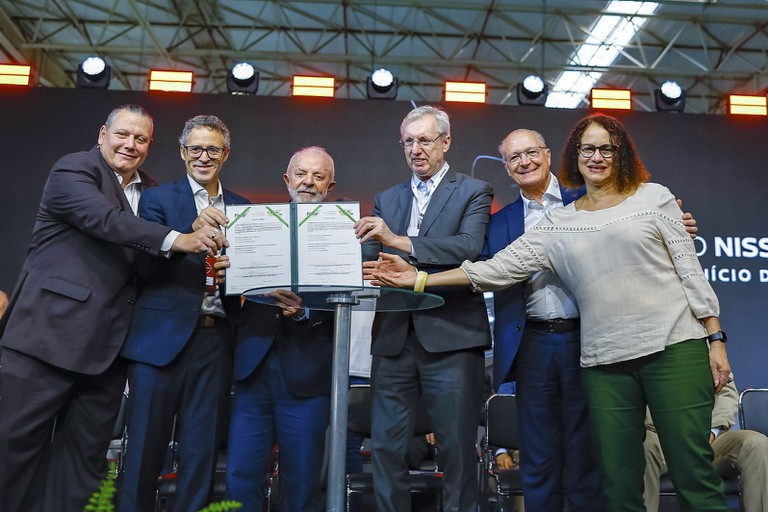
On April 15, 2025, Brazilian President Luiz Inácio Lula da Silva signed a decree aimed at implementing the Mover Program (Green Mobility and Innovation Program). This decree establishes mandatory requirements for the sale and import of new vehicles through compulsory technical standards, environmental criteria, and innovation incentives, thereby promoting the transition of Brazil's automotive industry towards a low-carbon economy.
Effective June 1, 2025, the sale of newly manufactured vehicles in Brazil and the sale of imported new vehicles are contingent upon the manufacturer or importer committing to meet the following mandatory requirements:
1. Minimum vehicle energy efficiency standards (tank-to-wheel cycle) and CO₂ equivalent emission standards (well-to-wheel cycle energy environmental efficiency).
2. Compliance with vehicle recyclability standards.
3. Participation in the vehicle labeling program.
4. Meeting structural performance standards and specified levels of driving assistance technology.
5. Starting January 1, 2027, compliance with mandatory Product Lifecycle Carbon Footprint requirements (relevant regulations have not yet been issued).
Note: Failure to meet the vehicle recyclability standards and labeling program requirements will result in the revocation of the company's *Certificate of Commitment Registration*. Failure to meet the light-duty vehicle energy efficiency targets will result in compensatory fines. Failure to meet the structural performance and driving assistance technology requirements will result in compensatory fines.
---
Detailed Vehicle Energy Efficiency Requirements:
Light-Duty Vehicles:
1. Minimum Vehicle Energy Efficiency Standard (Tank-to-Wheel cycle): Maintain energy consumption targets (CE1', CE1", and CE1'"), ensuring annual measured values do not exceed maximum limits before October 1, 2026.
2. Minimum Vehicle Energy Efficiency Standard (Well-to-Wheel cycle): Achieve energy consumption targets (CEM1' and CEM1") by October 1, 2027, and maintain annual measured values until 2031.
3. CO₂ Equivalent Emission Standard (Well-to-Wheel cycle Energy Environmental Efficiency): Achieve well-to-wheel CO₂ emission targets (ECM1' and ECM1") by October 1, 2027, and maintain annual measured values until 2031.
Heavy-Duty Vehicles:
Heavy-duty vehicle manufacturers must submit an energy efficiency report covering the period from October 1, 2027, to September 30, 2028, by October 1, 2028. (Implementation schedule, measurement methods, etc., are yet to be defined).
---
Detailed Vehicle Recyclability Requirements:
Light-Duty Vehicles:
Starting January 1, 2027, all M1 and N1 category vehicles must meet the following recycling/recovery targets:
1. Reuse and Recycling rate by mass: ≥ 80%
2. Reuse and Recovery rate by mass: ≥ 85%
For new vehicle models launched from January 1, 2027, and for all vehicles from January 1, 2030, the following requirements apply:
1. Reuse and Recycling rate by mass: ≥ 85%
2. Reuse and Recovery rate by mass: ≥ 95%
3. Marking of plastic and elastomer components to identify reusable and recyclable parts and materials.
4. Provision of a dismantling manual.
Starting January 1, 2032, manufacturers and importers of M1 and N1 category vehicles must ensure new models comply with a list of prohibited substances, including: Lead, Mercury, Cadmium, Hexavalent Chromium.
Note: From January 1, 2027, manufacturers and importers must demonstrate compliance with the above requirements to the highest federal traffic authority. Failure to do so will impact: ① The granting of vehicle brand/model/version codes in the National Vehicle Registry System (Renavam); ② The issuance of the Traffic Law Compliance Certificate (CAT).
Heavy-Duty Vehicles:
1. New models designed from January 1, 2028, and all newly manufactured domestic or imported M2, M3, N2, and N3 category heavy-duty vehicles from January 1, 2032, must meet material recyclability targets and mark plastic and elastomer components to identify reusable and recyclable parts and materials.
2. Manufacturers and importers must provide dismantling manuals for new M2, M3, N2, and N3 category models launched after January 1, 2027 (within 6 months of sales start), covering all vehicles from January 1, 2030.
Starting January 1, 2032, manufacturers and importers of M1 and N1 category vehicles must ensure new models comply with a list of prohibited substances, including: Lead, Mercury, Cadmium, Hexavalent Chromium.
Note: From January 1, 2027, manufacturers and importers must demonstrate compliance with the above requirements to the highest federal traffic authority. Failure to do so will impact: ① The granting of vehicle brand/model/version codes in the National Vehicle Registry System (Renavam); ② The issuance of the Traffic Law Compliance Certificate (CAT).







Please first Loginlater ~